Why do dogs eat poop? The honest answer is that nobody knows for certain, but it is common and usually does not mean your dog is sick or badly trained. In a 2018 study from the University of California, Davis, based on two owner surveys with about 3,000 responses, 16 percent of dogs were frequent stool eaters, meaning they had been seen doing it at least six times.
The same study found no link to diet or age, and reported that deterrent products and behavior methods almost never worked. That is why the practical answer is mostly about prevention: pick up stool right away. Several popular explanations do not hold up, so here are the main ones.
Myth: your dog must be missing something in its diet
What the evidence says: this is the most repeated explanation, and the UC Davis team found no evidence relating the behavior to diet. That does not rule out a medical problem in an individual dog, but switching foods or buying supplements on a hunch is unlikely to fix it.
What to do instead: if the behavior starts suddenly, or comes with weight loss, more hunger than usual, diarrhea, or a change in energy, book a veterinary visit and mention it. A sudden change is different from a long-standing habit.
Myth: only puppies do this
What the evidence says: puppies explore everything with their mouths, but the study found no connection between the behavior and a dog’s age. Plenty of adult dogs do it.
What to do instead: do not wait for your dog to grow out of it. Set up the management steps below at any age.
Myth: a dog that eats poop was not house trained properly
What the evidence says: dogs that ate stool were as easy to house train as dogs that did not. The researchers saw that as a sign these dogs still have the normal aversion to feces in their living area.
What to do instead: go easy on yourself and your dog. This is not a failure of training, and punishment will not help. It can teach a dog to do it faster or out of your sight.
Myth: a product from the pet store will solve it
What the evidence says: this is the finding most owners do not expect. The researchers looked at 11 commercial products along with behavior methods, and the reported success rate was close to zero.
What to do instead: save your money unless your veterinarian recommends something specific for your dog. Time spent on prevention will do more.
So why do some dogs do it?
The UC Davis authors offered a hypothesis, and it is an interesting one. Most stool eating involved fresh stool, no more than two days old. Parasite eggs in feces often are not infective at first and can develop infective larvae after about two days. An ancestral wolf that cleaned fresh stool out of its resting area may have protected itself from parasites, and some dogs may have inherited the tendency.
This remains a hypothesis, not a proven cause. It does fit one practical detail, though. If fresh stool is what attracts a dog, removing it quickly takes away the opportunity.
The study also found that dogs described as greedy eaters were more likely to do it. If your dog inhales every meal, that does not cause the habit, but it is worth knowing.
What helps most at home
| Step | How to do it | Why it helps |
|---|---|---|
| Remove stool right away | Pick up in the yard after every bathroom trip | Fresh stool is the main target, so there is nothing to find |
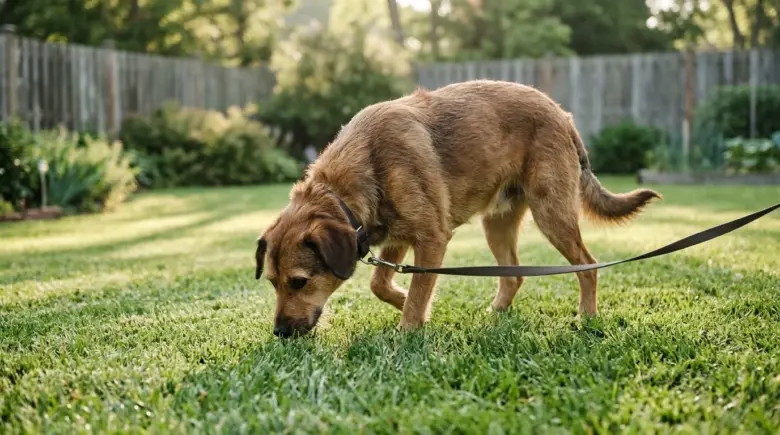
| Go out on a leash | Take your dog out on a leash for a few weeks | You can step in before your dog reaches it |
| Teach “leave it” | Practice with low-value items first, then near the yard | Gives you a clear cue instead of a chase |
| Reward the walk back | Call your dog to you and reward right after it finishes | Coming to you for a treat replaces turning around to sniff |
| Block the litter box | Use a baby gate or a covered, cat-only spot | Many dogs go after cat stool too, and this removes it |
The reward step works best with the short, well-timed sessions described in our guide to training a stubborn dog without punishment. If your dog tunes you out in the yard, our guide on why dogs ignore commands explains how to rebuild a cue around distractions.
Is it dangerous?
Eating stool can expose a dog to parasites, especially from other animals, so keep up with the parasite prevention and fecal checks your veterinarian recommends. It is also a good reason to wash your hands after handling your dog’s mouth or toys, and to skip face licks for a while.
Call your veterinarian if any of these apply:
- Your dog vomits or has diarrhea afterward.
- The stool may have contained a medication, such as stool from a recently treated pet.
- The habit began suddenly and comes with weight loss or unusual hunger.
If you are not sure what your dog got into, our guide to recognizing when a pet is sick lists the signs to watch.
Frequently asked questions
Why do dogs eat their own poop but not other dogs’ poop?
It varies by dog. The study covered dogs eating their own stool and stool from other dogs, and it found that dogs living with other dogs were among those who did it. There is no reliable rule, so keep the whole yard clean.
Why does my dog eat cat poop?
Many dogs seem drawn to the litter box. The practical fix is access: put the box behind a gate your cat can pass, or in a spot your dog cannot reach. Our guide to keeping a house clean with dogs and cats has more on litter areas.
Will pineapple or pumpkin stop a dog from eating poop?
These are popular home tips, but the study’s finding that products and methods rarely worked is a good reason to be skeptical. Removing stool quickly is the step with the clearest logic behind it.
Should I punish my dog for eating poop?
No. Punishment does not address the cause, can make your dog nervous around you, and may teach it to eat faster. Calmly prevent access and reward your dog for coming to you instead.
Your next step
For the next two weeks, go out with your dog on a leash, pick up every stool, and reward your dog for walking back to you. If you want to build a stronger response in the yard, start with our guide to improving your dog’s response to cues.

Jhon Roger runs PinupGeek Pet Wellness from Columbia, South Carolina, and is responsible for its pet-care guides, which draw on veterinary organizations, public agencies, and animal-welfare groups. Jhon is not a veterinarian and has no formal qualification in veterinary medicine or animal training, so these guides are educational and do not replace advice from a licensed veterinarian.