
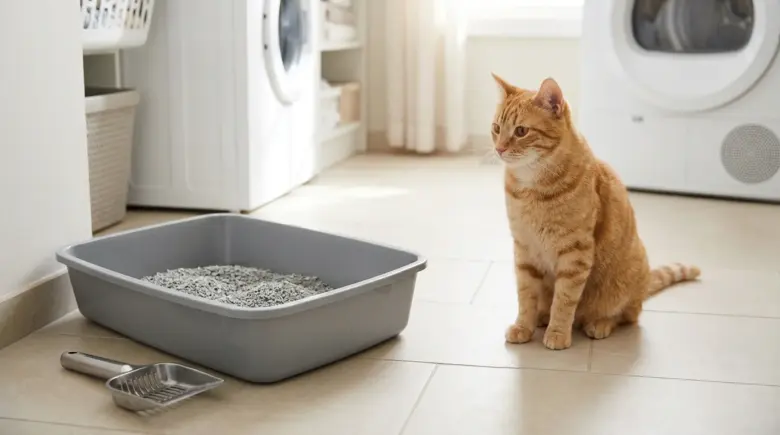
Here is how to clean a litter box in two parts: scoop waste out at least once a day, then empty the box and wash it with warm water and mild, unscented soap about once a week. Rinse it well, dry it completely, and refill with one to two inches of litter. Wash your hands afterward, even if you only used the scoop.
A clean box is more than a smell issue. The ASPCA lists a box that is not cleaned often or thoroughly enough among the common reasons cats start going elsewhere, and says at least 10 percent of cats develop elimination problems.
Health note: this guide is general information and does not replace advice from your doctor or veterinarian. If you are pregnant or have a weakened immune system, read the safety section below before you start.
What you need
- A sturdy scoop that fits your litter type
- Disposable gloves, if you like
- A small bag or lidded pail for waste
- Mild, unscented dish soap
- A dedicated sponge or brush that is never used on dishes
- Old towels for drying
- Fresh litter
Daily: scoop in under two minutes
- Scoop solids and clumps. Work from the edges toward the middle so nothing is left stuck to the sides.
- Bag the waste and tie it closed.
- Top up the litter to keep the depth at one to two inches. The ASPCA notes that cats usually prefer this depth, and that litter that is too deep can be a problem.
- Sweep around the box. Scattered litter is easier to manage when it has not been tracked through the house.
- Wash your hands with soap and running water.
If you have several cats, scoop more than once a day. A second pass in the evening takes very little time, and it keeps the box usable for the next cat.
Scooping also gives you a daily health check. Fewer clumps, much larger clumps, diarrhea, or repeated trips with little result are all worth noting. A cat that strains or cannot pass urine needs urgent veterinary care, as our guide to spotting illness early explains.
Weekly: wash the whole box
- Empty it. Pour used litter into a bag. Do this somewhere with fresh air to keep dust down.
- Scrape off stuck clumps with the scoop.
- Wash with warm water and mild soap. Pay attention to corners and the rim.
- Rinse thoroughly. Leftover soap smell can put a cat off.
- Dry completely. Damp litter sticks and clumps against the plastic, so the next cleaning gets harder.
- Refill with one to two inches of fresh litter.
- Wash the scoop and clean the floor or mat underneath.
If you use clumping litter and scoop faithfully, you may be able to stretch the full change a little, depending on how many cats share the box. If the box smells soon after scooping, or if your cat is hesitating to use it, wash it sooner.
How often to do each job
| Task | One cat | Two or more cats |
|---|---|---|
| Scoop | At least once a day | At least twice a day |
| Top up litter | As needed | As needed |
| Wash box and change litter | About weekly | About weekly, or sooner |
| Check scratched plastic | Monthly | Monthly |
Replace a box once its surface is deeply scratched and holds odor after washing. Scratches trap residue that soap cannot reach.
Cleaners to avoid
Cats have a sensitive sense of smell and touch, and a box that smells wrong to them may be rejected. Skip strong scents, including citrus cleaners and scented deodorizers. Do not use ammonia-based products, which smell like urine and may encourage a cat to mark. Never mix cleaning products, and keep cats away until the box is rinsed and dry.
If you are also dealing with accidents around the house, read our guide to removing pet odors at the source. Our guide to keeping a home clean with pets covers mats, ventilation, and wider cleaning routines.
Who should not clean the box
Litter boxes can carry germs that affect people. The CDC says to change litter boxes daily and always wash your hands afterward, and advises that people with weakened immune systems and pregnant women should not clean litter boxes, if possible. The concern includes toxoplasmosis, a parasite infection that can spread through contact with cat feces.
If you are in one of those groups, ask someone else to take this job. If nobody can, wear disposable gloves, scoop daily, and wash your hands well. Your doctor can give you advice for your situation.
When a clean box still is not working
If your cat avoids a box that you know is clean, look past hygiene. A cat that has developed a preference for a rug or a bed can keep going back to that surface, so act early, and clean any accident with a product made for pet urine. A sudden change in litter habits can also be medical. Ask your veterinarian to rule out a health problem before you assume it is behavior.
How many boxes, and where
A perfect cleaning routine cannot make up for too few boxes. The ASPCA recommends one box per cat plus one extra, so two cats get three boxes. Place them in quiet spots your cat can reach at all times, away from noisy appliances and food bowls. The box should also be big enough for your cat to turn around in comfortably, and some cats dislike hoods or liners.
Your next step
Pick a fixed time for scooping, such as right after you feed your cat in the morning, and put the weekly wash on your calendar. Next, cut down on the hair that ends up around the litter area with our guide to reducing shedding without harmful products.

Jhon Roger runs PinupGeek Pet Wellness from Columbia, South Carolina, and is responsible for its pet-care guides, which draw on veterinary organizations, public agencies, and animal-welfare groups. Jhon is not a veterinarian and has no formal qualification in veterinary medicine or animal training, so these guides are educational and do not replace advice from a licensed veterinarian.