Learning how to bathe your pet at home can save time, reduce stress, and keep your living space cleaner, but the biggest challenge is usually not the bath itself. The real problem is what happens around the bath: water on the floor, loose fur in the drain, shampoo residue on the coat, towels everywhere, and a nervous pet trying to escape halfway through.
A cleaner bath starts before the water turns on. When the room is prepared, the supplies are within reach, and your pet is brushed before getting wet, the process becomes calmer and much easier to control. This is especially important for pets that dislike water, slip easily, shed heavily, or become anxious in small spaces.
Not every pet needs the same type of bath. Dogs usually tolerate baths better than cats, while most cats stay clean with regular brushing and only need a bath in specific situations. Small pets, senior pets, pets with skin issues, and animals with medical conditions need extra caution because a normal bath can quickly become stressful or unsafe.
The goal is not to make bath time perfect. The goal is to make it organized, safe, quick, and predictable enough that both you and your pet finish with less mess and less frustration.
Important safety note: use lukewarm water, choose products made for pets, avoid getting shampoo or water in the eyes and ears, and contact a veterinarian if your pet has open wounds, intense itching, skin redness, ear discharge, breathing difficulty, extreme fear, or any health condition that could make bathing risky.
Before You Bathe Your Pet at Home, Decide If a Full Bath Is Really Needed
A full bath is useful when your pet has visible dirt, a strong odor, sticky residue, mud, urine, feces, allergens on the coat, or a coat that has become greasy. However, bathing too often can dry the skin, irritate sensitive areas, or make the coat dull, especially when the wrong shampoo is used.
For dogs, the right bathing frequency depends on coat type, lifestyle, skin condition, and odor. A dog that plays outside, swims, rolls in dirt, or has skin folds may need more cleaning than a short-haired indoor dog. Brushing between baths often keeps the coat cleaner and reduces shedding around the home.
For cats, a bath is usually not part of routine care. Most cats groom themselves well and benefit more from regular brushing than frequent bathing. A cat may need a bath if it gets into something sticky, oily, unsafe to lick, or if a veterinarian recommends it. If the cat is panicking, biting, or becoming unsafe to handle, it is better to stop and ask a groomer or veterinarian for help.
| Situation | Best Cleaning Option | Important Caution |
|---|---|---|
| Muddy paws after a walk | Wipe paws with a damp towel or rinse only the feet | A full bath is usually unnecessary |
| Strong odor across the whole coat | Full bath with pet-safe shampoo | Persistent odor may indicate skin or ear problems |
| Loose hair and light dust | Brush before considering a bath | Bathing without brushing can worsen tangles |
| Sticky, oily, or unknown substance on fur | Call a veterinarian if the substance may be toxic | Do not let the pet lick the coat |
| Cat with a normal clean coat | Regular brushing instead of bathing | Most cats rarely need a bath |
| Red, itchy, flaky, or painful skin | Veterinary guidance before bathing | Wrong products can make irritation worse |
Prepare the Bathroom So the Mess Is Controlled Before Water Starts
The easiest way to avoid a messy bath is to treat the room like a small work area. Remove items from the floor, close nearby doors, place towels where splashes will happen, and keep all products within arm’s reach. Once your pet is wet, leaving the room to find shampoo or another towel usually creates chaos.
Use a bathtub, shower, utility sink, or large basin depending on your pet’s size. Small dogs may be easier to bathe in a sink, while medium and large dogs are usually safer in a bathtub or shower. The surface should not be slippery. A rubber bath mat, towel, or non-slip pad can prevent panic caused by sliding paws.
Before bringing your pet in, check the drain. Loose fur can quickly clog it, especially with double-coated breeds. A drain cover or hair catcher helps protect plumbing and makes cleanup faster. Keep a trash bag nearby for fur, cotton pads, used wipes, and packaging.
- Place a non-slip mat or towel inside the tub, sink, or shower.
- Keep at least two absorbent towels close to the bathing area.
- Put shampoo, cup, brush, washcloth, and treats within reach.
- Use a drain cover to catch loose fur before it enters the pipe.
- Close doors or use a baby gate so your pet cannot run through the house while wet.
- Wear clothes that can get wet and scratched without becoming a problem.
- Remove rugs, baskets, toilet paper, and anything that can absorb splashed water.
Choose the Right Supplies for a Cleaner and Safer Bath
The right supplies reduce mess because they make each step faster. A pet-safe shampoo, a washcloth for the face, a cup or handheld sprayer, a towel for the floor, and a second towel for drying are usually enough. Avoid using human shampoo, strong fragrances, household soap, dish soap, or products made for another species unless a veterinarian specifically recommends them.
Pet shampoos are made for animal skin and coat needs. Even mild human products can be too harsh for regular use because pets have different skin sensitivity, and many animals lick their coat after bathing. Medicated, flea, antifungal, or deodorizing shampoos should be used carefully because some ingredients are not safe for every animal, especially cats.
One practical trick is to dilute the shampoo in a small cup of water before applying it. Diluted shampoo spreads more evenly, rinses out faster, and reduces the chance of sticky residue. This is useful for dense coats, long hair, and pets that do not tolerate long rinsing sessions.
| Supply | Why It Helps | Mistake to Avoid |
|---|---|---|
| Pet-safe shampoo | Cleans without using harsh human products | Using human shampoo as a regular solution |
| Non-slip mat | Helps the pet feel stable and less panicked | Bathing on a slick surface |
| Washcloth | Cleans the face without spraying water into eyes or ears | Pouring water directly over the head |
| Drain hair catcher | Collects fur and prevents clogs | Letting loose hair go straight into the drain |
| Two or more towels | Controls dripping before the pet leaves the bathroom | Using only one small towel for a wet pet |
| Treats or lick mat | Helps create a calmer association with bath time | Only offering rewards after the pet is already stressed |
How to Bathe Your Pet at Home Without Making a Mess Step by Step
The cleanest method is slow, organized, and controlled. Rushing usually causes more splashing, more slipping, and more resistance. Before starting, brush your pet well, especially if the coat is long, thick, curly, or shedding heavily. Wet tangles can tighten and become harder to remove.
-
Brush the coat before the bath.
Remove loose hair, dirt, and small tangles before water touches the coat. This keeps fur out of the drain and helps shampoo reach the skin. Do not pull painful mats; if they are tight, close to the skin, or widespread, ask a professional groomer or veterinarian for help.
-
Set the room before bringing your pet in.
Prepare towels, shampoo, cup, washcloth, treats, and drain protection first. This prevents you from leaving a wet pet unattended. A wet animal can slip, jump, shake water everywhere, or run through the house in seconds.
-
Use lukewarm water and wet the body slowly.
Start around the shoulders or back instead of the face. Lukewarm water is more comfortable and safer than hot or cold water. Keep the water pressure gentle because loud spraying can scare sensitive pets.
-
Apply pet-safe shampoo from neck to tail.
Use a small amount and spread it with your hands. Work with the direction of the coat instead of scrubbing aggressively. Avoid the eyes, ears, nose, and mouth. For the face, use a damp washcloth instead of direct shampoo.
-
Rinse longer than you think you need to.
Soap left in the coat can attract dirt and irritate the skin. Rinse until the water runs clear and the coat no longer feels slippery. Dense coats may need section-by-section rinsing, especially around the chest, belly, tail, and legs.
-
Squeeze water from the coat before using towels.
Gently press water out with your hands, especially on long hair. This reduces how much water ends up on the floor. Do not twist the coat or pull the skin.
-
Dry your pet before opening the bathroom door.
Use the first towel to absorb most water and the second towel to finish drying. If your pet tolerates it, keep them in the bathroom for a few minutes after the bath so the first shake happens where the mess is easier to clean.
-
Clean the bath area immediately.
Remove fur from the drain cover, wipe splashes, hang towels, and rinse away shampoo residue. Cleaning right away prevents slippery floors, odor, and buildup around the tub.
How to Reduce Splashing, Shaking, and Wet Footprints
Most bath mess comes from three moments: the first rinse, the full-body shake, and the escape after the bath. You can reduce all three by controlling water pressure, keeping one hand gently on your pet, and drying before your pet leaves the room.
A handheld shower sprayer is helpful, but only if the pressure is soft. If the sprayer is loud or too strong, use a cup instead. Pour water close to the coat rather than from high above. The shorter the distance between water and fur, the less splashing you create.
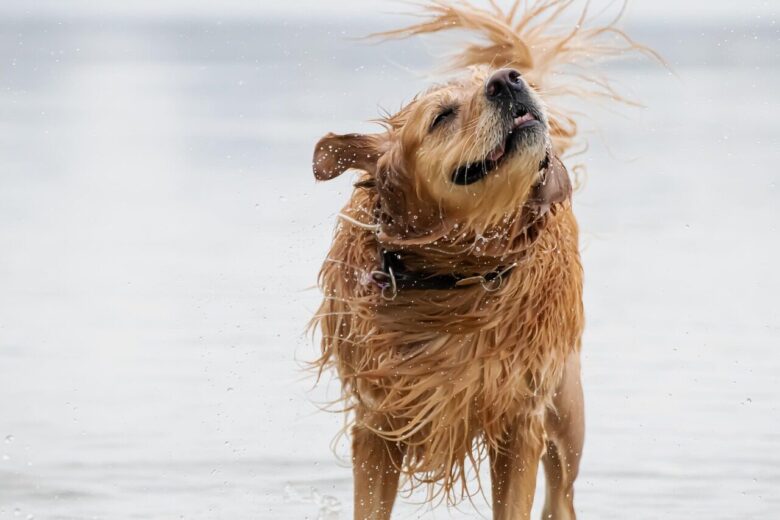
The shake is harder to stop, but it can be managed. Many pets shake when water reaches the head, ears, or neck. Cleaning the face last with a damp washcloth helps delay that reaction. After rinsing, place a towel over the back and shoulders before your pet has a chance to shake freely.
- Keep the bathroom door closed until your pet is mostly dry.
- Use low water pressure to prevent bouncing water from hitting walls and floors.
- Place a towel on the floor where your pet will step out.
- Clean the face with a damp cloth instead of spraying the head.
- Dry the chest, belly, paws, and tail carefully because these areas drip the most.
- Let your pet shake inside the tub or shower before stepping onto the floor.
- Brush again only after the coat is dry enough for the brush to move comfortably.
Special Care for Dogs, Cats, Puppies, Senior Pets, and Anxious Pets
Dogs usually do best with a predictable routine. Let them sniff the bathing area, reward calm behavior, and keep your voice relaxed. If a dog is afraid of the tub, practice standing in the dry tub with treats before the actual bath day. This reduces the chance of a messy struggle later.
Cats need a different approach. Many cats do not need full baths and may become extremely stressed when submerged or sprayed. If a cat needs cleaning, start with brushing, wiping, or spot cleaning. Use a shallow amount of lukewarm water only when necessary, and never force a panicked cat through a full bath just to finish the task.
Puppies and senior pets need extra stability and warmth. Puppies may slip easily and become scared if the experience is too intense. Senior pets may have joint pain, weak balance, or medical conditions that make standing in a tub uncomfortable. Keep sessions short and support the body gently.
| Pet Type | Best Approach | When to Stop |
|---|---|---|
| Short-haired dog | Quick rinse, light shampoo, thorough towel drying | If skin looks red, painful, or irritated |
| Long-haired dog | Brush before bathing and rinse in sections | If mats tighten or pulling causes pain |
| Cat | Brush or spot clean first; bathe only when truly needed | If the cat is panicking, biting, or breathing rapidly |
| Puppy | Use a calm, short, reward-based bath | If the puppy becomes cold, shaky, or overwhelmed |
| Senior pet | Use support, warm towels, and a shorter session | If standing becomes difficult or painful |
| Pet with skin issues | Follow veterinary product instructions | If symptoms worsen after bathing |
Common Mistakes That Make Pet Baths Messier Than Necessary
One common mistake is bathing before brushing. Loose fur and tangles become heavier when wet, which leads to clogged drains, longer rinsing, and more cleanup. Brushing first is one of the simplest ways to keep the bathroom cleaner.
Another mistake is using too much shampoo. More shampoo does not mean a cleaner pet. It usually means more rinsing, more residue, and more time in the tub. A small amount, diluted when useful, is easier to spread and easier to remove.
Many people also forget to manage the exit. A wet pet that jumps out of the tub and runs across the house can undo the entire cleanup plan. Place towels near the tub, close the door, dry the paws and belly first, and only then let your pet leave the room.
| Mistake | Why It Creates a Mess | Better Method |
|---|---|---|
| Skipping brushing | Loose fur sticks to wet surfaces and clogs drains | Brush before water touches the coat |
| Using too much shampoo | Creates residue and extends rinsing time | Use a small amount and dilute when needed |
| Spraying the face directly | Triggers shaking, fear, and splashing | Use a damp washcloth for the face |
| Bathing on a slippery surface | Causes panic and scrambling | Use a non-slip mat or towel |
| Opening the door too soon | Lets a wet pet run through the home | Dry inside the bathroom first |
| Ignoring skin or ear symptoms | May worsen an underlying problem | Ask a veterinarian before using products |
When You Should Not Bathe Your Pet at Home
Home bathing is not always the safest option. If your pet has open wounds, severe mats, painful skin, heavy flea infestation, ear discharge, a strong medical odor, repeated scratching, or sudden hair loss, a regular bath may not solve the problem. It may hide symptoms for a short time while the underlying issue continues.
Severe matting deserves special caution. Mats can pull on the skin, trap moisture, and cause irritation. Cutting mats with scissors at home is risky because pet skin can fold into the mat. Clippers made for pets are safer in trained hands, but a professional groomer or veterinarian is the better choice when mats are tight, widespread, or close to sensitive areas.
You should also avoid bathing a pet that is extremely fearful, aggressive, weak, breathing abnormally, or unable to stand safely. In these cases, forcing the bath can lead to injury for both the pet and the person. A veterinarian, groomer, or behavior professional can suggest a safer plan.
How to Keep Your Home Clean After the Bath
Cleanup should happen before the bathroom dries. Wet fur sticks to walls, drains, towels, and corners, so removing it immediately is easier than waiting. Start with the drain cover, then wipe the tub, floor, walls, faucet, and any splashed surfaces.
Wash towels separately if they are covered in fur. Shake them outside first if possible, then use a lint roller or brush to remove excess hair before placing them in the washing machine. This helps prevent pet hair from spreading to other laundry.
After the bath, check your pet’s coat once it is dry. The coat should feel clean but not sticky. If it feels slippery, greasy, or stiff, shampoo may still be present. In that case, a gentle rinse may be needed. Watch for itching, redness, dandruff, or unusual licking after bath time, especially when using a new product.
Conclusion
The best way to bathe your pet at home without making a mess is to prepare the space, brush first, use lukewarm water, apply a small amount of pet-safe shampoo, rinse carefully, and dry your pet before leaving the bathroom. Most messes happen because the bath starts before the room is ready.
A clean bath is also a safe bath. Keep water away from the eyes and ears, use a non-slip surface, avoid harsh products, and do not force a frightened pet through a full bath. For cats, senior pets, pets with skin problems, or animals with severe mats, a lighter cleaning method or professional help may be the better choice.
If your pet smells bad again quickly, scratches after bathing, has red skin, shakes the head often, or shows signs of pain, the next step is not another stronger bath. The safer option is to contact a veterinarian or qualified groomer to check whether there is an underlying skin, ear, parasite, or coat problem.
FAQ
1. How often should I bathe my pet at home?
It depends on the species, coat type, lifestyle, and skin health. Many dogs only need baths when they are dirty, smelly, or exposed to something that should be removed from the coat. Cats usually need baths much less often because they groom themselves and usually benefit more from brushing. Pets with allergies, skin conditions, or special grooming needs may require a plan from a veterinarian. If your pet’s coat looks healthy and smells normal, brushing and spot cleaning may be enough between full baths.
2. Can I use human shampoo on my dog or cat?
Human shampoo is not the best choice for routine pet bathing. Pets have different skin needs, and many animals lick their coat after a bath. A shampoo made for pets is safer because it is designed for animal skin and coat care. Avoid strong fragrances, harsh soaps, dish soap, and medicated products unless a veterinarian recommends them. Cats are especially sensitive to many ingredients, so never use a dog product on a cat unless the label clearly says it is safe for cats.
3. Why should I brush my pet before bathing?
Brushing before bathing removes loose fur, dirt, and small tangles. This keeps hair out of the drain and helps shampoo spread more evenly. Wet tangles can tighten, making them harder and more painful to remove. For long-haired, curly-coated, or double-coated pets, brushing first is one of the most important steps. If the coat has severe mats, do not pull or cut them with scissors. Ask a professional groomer or veterinarian for help because mats can sit very close to the skin.
4. How do I stop my pet from shaking water everywhere?
You may not stop shaking completely, but you can control where it happens. Avoid spraying water directly on the head because that often triggers shaking. Clean the face with a damp washcloth and keep a towel ready over the shoulders as soon as rinsing is finished. Let your pet shake inside the tub or shower before stepping onto the floor. Keep the bathroom door closed until your pet is mostly dry, and place towels on the floor where your pet will step out.
5. What water temperature is safest for pet bathing?
Lukewarm water is usually the safest choice. Water that feels hot to your hand can be uncomfortable or unsafe for your pet, especially for small animals, puppies, senior pets, and pets with sensitive skin. Cold water can also be stressful and may make the pet resist the bath. Test the water before it touches the coat and keep the pressure gentle. If your pet trembles, tries to escape, or seems uncomfortable, pause and adjust the temperature or stop the bath if needed.
6. Should I wash my pet’s face with shampoo?
In most cases, avoid putting shampoo directly on the face. The eyes, nose, mouth, and ears are sensitive, and shampoo in these areas can cause irritation or panic. A damp washcloth is usually enough for the face. Wipe gently around the muzzle, cheeks, and forehead without pushing water into the ears. If there is discharge, odor, crusting, swelling, or pain around the eyes or ears, do not try to solve it with shampoo. A veterinarian should check those signs.
7. What should I do if my pet hates baths?
Start by making the bathing area less scary before bath day. Let your pet enter the bathroom, sniff the tub, stand on the mat, and receive treats without water running. Gradually add small steps, such as turning on water nearby or touching the paws with a damp cloth. Keep sessions short and calm. If your pet panics, bites, scratches, or cannot settle, forcing the bath can make future grooming harder. A professional groomer or veterinarian may help create a safer plan.
8. How can I keep fur from clogging the drain?
Brush your pet thoroughly before the bath and use a drain hair catcher. This is especially important for shedding breeds, double-coated dogs, and long-haired pets. During the bath, remove clumps of fur from the tub before they wash down the drain. After the bath, clean the drain cover immediately and throw the fur in the trash. Avoid rinsing large amounts of hair into the plumbing. A few minutes of prevention can save a messy clog and a difficult cleanup later.
9. Can I bathe my cat at home?
You can bathe a cat at home only when it is truly necessary and safe to do so. Most cats rarely need full baths and usually stay clean with regular brushing. A bath may be needed if the cat gets into something sticky, greasy, dirty, or unsafe to lick. Use shallow lukewarm water, move slowly, and avoid spraying the face. If the cat becomes extremely stressed, aggressive, or difficult to handle safely, stop. A veterinarian or cat-experienced groomer is a better option.
10. What is the best way to dry my pet after a bath?
Start by gently pressing water out of the coat with your hands, then use an absorbent towel. Dry the back, chest, belly, legs, paws, and tail before your pet leaves the bathroom. Long-haired pets may need more than one towel. If using a dryer, choose a low or cool setting only if your pet tolerates the sound and airflow. Never use high heat. Some pets become frightened by dryers, so towel drying and a warm room may be safer.
11. Why does my pet still smell bad after a bath?
If your pet still smells bad after a proper bath, the odor may not be coming from surface dirt. Common causes include ear problems, dental issues, skin infections, skin folds, anal gland problems, or shampoo residue that was not fully rinsed. A stronger shampoo is not always the solution. Check whether the coat feels sticky, the ears smell unusual, or the skin looks red or flaky. If the odor returns quickly or seems strong, schedule a veterinary check.
12. When should I use a professional groomer instead of bathing at home?
Use a professional groomer when your pet has severe mats, a difficult coat, strong fear, large size, mobility issues, or grooming needs that require special tools. A groomer is also helpful when you cannot safely control water, drying, or handling at home. If your pet has skin wounds, heavy itching, parasites, ear discharge, pain, or a medical condition, contact a veterinarian first. Groomers handle coat care, while veterinarians diagnose and treat health problems that may look like grooming issues.
Editorial note: this article is for educational purposes and does not replace veterinary care. Bathing needs can vary by species, breed, coat type, age, skin condition, and stress level, so contact a veterinarian or qualified groomer when a pet shows pain, skin irritation, severe matting, strong fear, unusual odor, or symptoms that do not improve.
Official References
- ASPCA — General Dog Care
- ASPCA — General Cat Care
- Merck Veterinary Manual — Routine Health Care of Dogs
The PinupGeek Editorial Team researches and edits practical pet-care, hygiene, and behavior guides using reputable veterinary organizations, public agencies, animal-welfare groups, and primary or reference sources where appropriate. Our content is educational and does not replace diagnosis, treatment, or individualized advice from a licensed veterinarian. Articles may be updated when guidance or source information changes.